
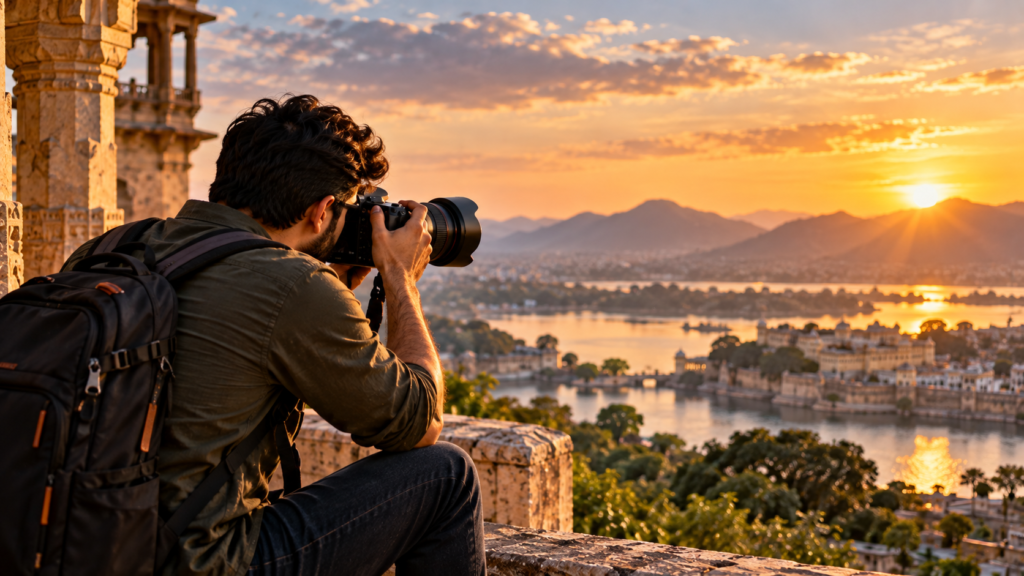
What Makes a Great Photographer? 15 Skills That Really Matter
Great photography is not defined by the camera you own. It is defined by what you notice, how you interpret a scene, and the decisions you make before pressing the shutter.
What separates an ordinary photograph from one that people remember?
Is it an expensive camera? A professional lens? Advanced editing software? Or years of experience?
All these things can influence the final result, but they do not fully explain why some photographs create a powerful impression while others are quickly forgotten.
Imagine two photographers standing in the same location with identical cameras.
The first photographer notices a beautiful building and captures a technically correct image.
The second photographer notices sunlight passing through an archway, a person walking into the frame, and the way the surrounding shadows create a natural composition.
Both photographs show the same location. Yet one communicates something more.
The difference often comes down to Photography Skills that extend beyond camera settings.
A great photographer combines observation, lighting knowledge, composition, technical control, timing, patience, creativity, and storytelling.
These abilities work together to transform ordinary subjects into meaningful images.
Whether you photograph weddings, portraits, wildlife, landscapes, products, travel destinations, or everyday life, developing these Photography Skills can improve the quality and consistency of your work.
In this guide, we will explore 15 essential Photography Skills every photographer should develop, explain why they matter, and provide practical exercises you can use to improve.
What Makes Someone a Great Photographer?
A great photographer is not simply someone who produces sharp, well-exposed photographs.
Technical accuracy matters, but photography also involves interpretation.
A photograph can be technically perfect and still feel emotionally empty.
Another photograph may contain slight imperfections yet communicate a powerful moment that viewers remember for years.
Strong photographers learn to balance three fundamental elements:
Technical ability: Understanding exposure, focus, shutter speed, aperture, lenses, and camera operation.
Visual awareness: Recognizing light, composition, color, perspective, patterns, and meaningful details.
Creative intention: Knowing what the photograph should communicate and making deliberate decisions to achieve that result.
The most important Photography Skills connect these three elements.
They help photographers recognize opportunities, respond to changing conditions, and create photographs that have a clear purpose.
1. Observation: Learning to See Before You Shoot
Observation is one of the most fundamental Photography Skills.
Many beginners raise their cameras as soon as they see something interesting.
Experienced photographers often spend additional time examining the entire scene.
They notice details that others overlook.
These details may include a reflection in a window, a shadow crossing a wall, a subtle facial expression, an unusual pattern, or a relationship between two people.
The goal is not simply to look at a subject.
It is to understand what makes that subject visually interesting.
How to improve observation
Before taking a photograph, ask yourself:
What attracted my attention?
What is the most important element in the scene?
Where is the light coming from?
Is anything distracting in the background?
Could the photograph improve if I changed my position?
Is there a moment worth waiting for?
Practical exercise
Visit an ordinary location such as a garden, marketplace, café, or street.
Spend five minutes observing without taking photographs.
Then capture five images of details you might otherwise have missed.
This exercise trains your attention and helps you recognize photographic opportunities in familiar surroundings.
25 Essential Photography Tips for Beginners and Professionals
2. Lighting: Understanding the Foundation of Photography
Light influences almost every aspect of a photograph.
It determines exposure, reveals texture, creates depth, shapes faces, and contributes to atmosphere.
Understanding lighting is one of the essential Photography Skills for photographers working in any genre.
A portrait photographer needs to recognize flattering light.
A landscape photographer must understand how sunlight changes throughout the day.
A wedding photographer often works with rapidly changing natural and artificial lighting.
A product photographer may need precise control over reflections and shadows.
Understand light direction
Front lighting illuminates the subject from the camera’s direction. It can reveal details clearly but may produce a relatively flat appearance.
Side lighting emphasizes texture, form, and dimension.
Backlighting can create silhouettes, rim lighting, or a luminous atmosphere.
Understand light quality
Hard light produces defined shadows and stronger contrast.
Soft light creates gradual transitions between highlights and shadows.
Neither is automatically better.
The appropriate lighting depends on the subject and intended mood.
Practical exercise
Photograph the same person or object in direct sunlight, open shade, near a window, and during golden hour.
Compare the results.
Notice how the light changes the appearance and emotional character of the subject.
The objective is to learn which lighting conditions support different photographic intentions.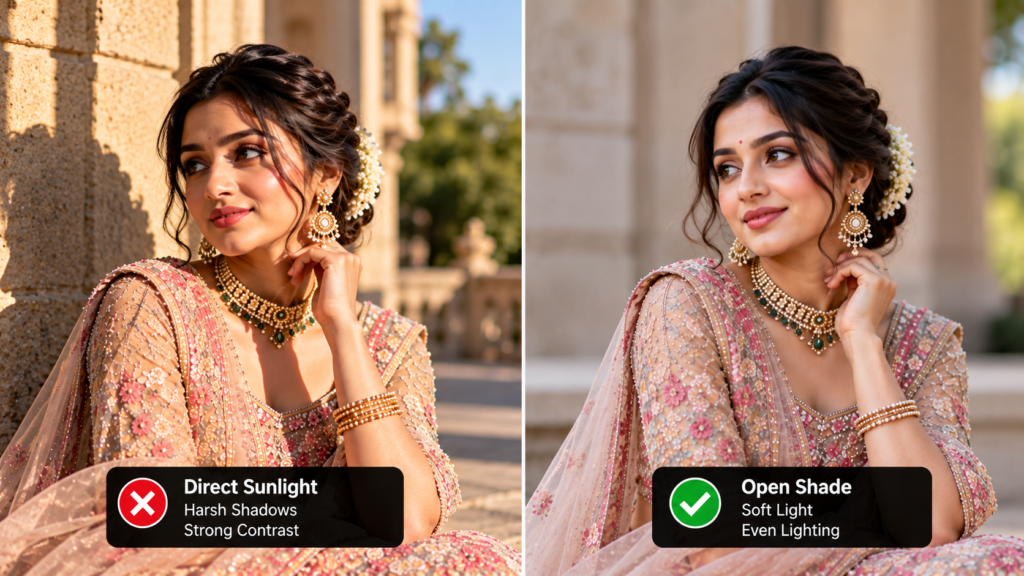
3. Composition: Creating Order Inside the Frame
Composition is the arrangement of visual elements within a photograph.
It determines where viewers look and how they interpret the scene.
Among the most valuable Photography Skills, composition has an immediate effect on visual clarity.
A strong composition helps the subject stand out.
A weak composition may include unnecessary objects, confusing backgrounds, or competing points of interest.
Important composition techniques
Rule of thirds: Position important subjects near the intersections of an imaginary three-by-three grid.
Leading lines: Use pathways, architectural edges, roads, or natural formations to direct attention.
Symmetry: Create balance using repeated or mirrored visual elements.
Negative space: Leave uncluttered areas around a subject to emphasize simplicity, scale, or isolation.
Natural framing: Use windows, doorways, trees, or other environmental elements to frame the subject.
Foreground interest: Include relevant objects near the camera to add depth and context.
Practical exercise
Choose one subject and create five different compositions without changing the subject.
Experiment with distance, camera height, framing, and background.
Review which composition communicates the clearest visual message.
Remember that composition guidelines are tools, not rules that must always be followed.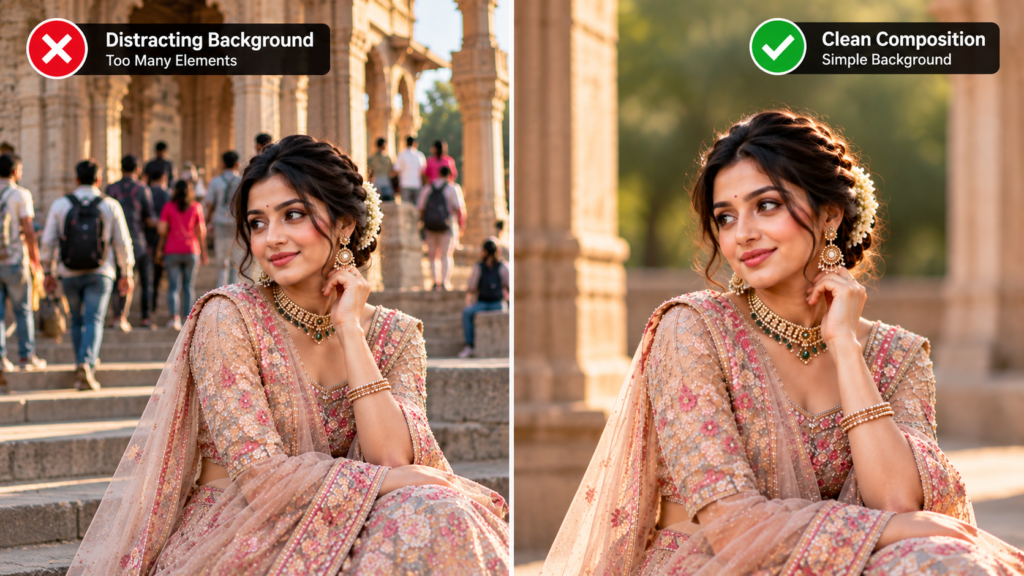
4. Camera Control: Understanding Exposure and Focus
Creative vision becomes more effective when you understand how to control your equipment.
Camera operation remains one of the foundational Photography Skills.
You do not need to use manual mode for every photograph, but you should understand how camera settings influence the result.
Aperture
Aperture affects the amount of light entering the lens and influences depth of field.
A wider aperture can create stronger background separation.
A narrower aperture can help keep more of the scene acceptably sharp.
Shutter speed
Shutter speed controls how long the camera records light.
Fast shutter speeds help freeze movement.
Slow shutter speeds can create intentional motion blur.
ISO
ISO influences image brightness and noise characteristics.
Higher ISO settings can be useful when available light is limited, although the amount of noise depends on the camera and shooting conditions.
Focus
Accurate focusing helps ensure that the intended subject receives the viewer’s attention.
For portraits, focusing on the nearest visible eye is often a useful starting point.
For moving subjects, continuous autofocus and appropriate tracking settings can improve consistency.
Practical exercise
Photograph a moving subject using several shutter speeds.
Then photograph a stationary subject using different apertures.
Compare how motion and depth of field change.
Understanding these relationships helps you make deliberate creative decisions instead of relying entirely on automatic settings.Adobe — Exposure Triangle
5. Timing: Capturing the Right Moment
Timing can transform a photograph.
An ordinary scene may become compelling when a person enters the frame, an expression changes, or an action reaches its most meaningful point.
This is particularly important in wedding, sports, wildlife, documentary, and street photography.
Consider a wedding ceremony.
A photograph of the couple standing together may be beautiful.
But the moment when their families react emotionally can communicate something more personal.
A photographer who anticipates that interaction has a better chance of capturing it.
How to improve timing
Observe your subject’s behavior.
Learn to recognize patterns of movement.
Prepare your framing before an anticipated moment.
Choose camera settings appropriate for the action.
Remain attentive instead of reviewing every photograph immediately after taking it.
Practical exercise
Photograph a simple repeated action, such as someone walking through a doorway, a person pouring water, or a cyclist passing a fixed point.
Try to capture the strongest moment using careful anticipation.
Review how small timing differences change the photograph.
6. Patience: Knowing When to Wait
Patience is an underrated photography skill.
Modern cameras allow photographers to capture hundreds of images quickly, but quantity does not automatically create quality.
Sometimes the strongest photograph requires waiting.
A landscape photographer may wait for clouds to reveal sunlight.
A wildlife photographer may wait for an animal to move into a clearer position.
A portrait photographer may wait for a natural expression.
A street photographer may wait for the right person to enter a composition.
Practical exercise
Find an interesting location and select one composition.
Instead of immediately changing positions, observe the scene for ten minutes.
Notice how people, light, shadows, and movement change.
Capture photographs only when something meaningfully improves the composition.
This teaches you to recognize when the moment is ready.
7. Creativity: Finding New Ways to Photograph Familiar Subjects
Creativity does not always require an extraordinary location.
It often involves discovering a different way to interpret something ordinary.
A staircase can become an abstract pattern.
A window can become a source of dramatic portrait lighting.
A puddle can create an unusual reflection.
A simple household object can become a compelling study of texture and shape.
Developing creativity is one of the Photography Skills that can distinguish your work from repetitive imagery.
Ways to improve creativity
Experiment with unfamiliar perspectives.
Try different focal lengths when available.
Explore reflections and silhouettes.
Use shadows as important compositional elements.
Work with a limited color palette.
Create photographs that emphasize small details.
Practical exercise
Choose an ordinary object and photograph it in ten different ways.
Avoid replacing the subject.
Change the lighting, framing, perspective, distance, and visual emphasis instead.
This exercise encourages original thinking without requiring additional equipment.
8. Emotional Awareness: Recognizing Meaningful Expressions
Photography can communicate feelings that are difficult to describe in words.
Emotional awareness is especially valuable in wedding, portrait, family, and documentary photography.
A technically accurate photograph may record what happened.
An emotionally attentive photograph can communicate how a moment felt.
Consider the difference between a posed family portrait and an unplanned embrace between relatives.
Both have value.
However, the spontaneous interaction may reveal a relationship that cannot be recreated through posing alone.
What to observe
Pay attention to facial expressions.
Notice subtle gestures and body language.
Observe how people interact.
Recognize anticipation, affection, excitement, nervousness, and relief.
Remain respectful when photographing personal or sensitive moments.
Practical exercise
During a suitable gathering or portrait session, photograph interactions rather than asking everyone to look directly at the camera.
Afterward, identify which photographs communicate emotion most clearly.
This exercise can strengthen both candid photography and visual storytelling.Groom Portrait Photography
9. Storytelling: Making Photographs Communicate Something
A memorable photograph often communicates more than the appearance of a subject.
It may suggest a relationship, event, atmosphere, or personal experience.
Visual storytelling is one of the Photography Skills that connects technical ability with emotional impact.
Three elements of photographic storytelling
Subject: Who or what is the photograph about?
Context: Which surrounding details help explain the situation?
Moment: What makes this particular instant meaningful?
For example, a photograph of a decorated wedding venue documents its appearance.
A photograph of the same venue after the celebration, with fading light and empty chairs, may communicate the atmosphere of an event coming to an end.
The second image provides a different kind of story.
Practical exercise
Create a three-photograph story about an ordinary activity.
Photograph the preparation, the main action, and the result.
Arrange the images in a sequence that someone unfamiliar with the activity can understand.
This develops your ability to communicate through visual relationships.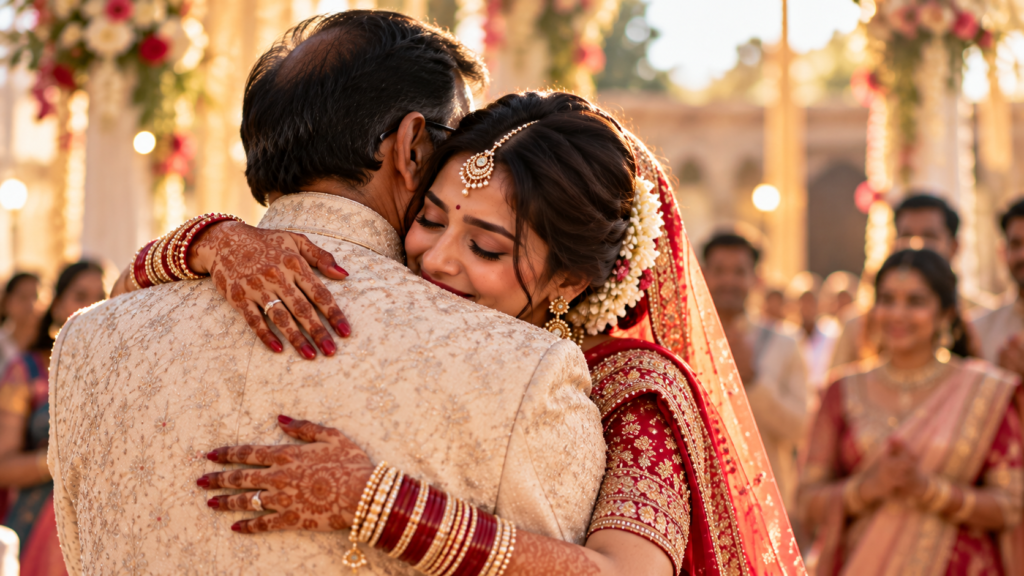
10. Perspective: Choosing the Best Viewpoint
The position of your camera influences how viewers experience a subject.
Photographing everything from standing eye level can create repetitive results.
Changing your viewpoint can reveal patterns, simplify backgrounds, and alter the apparent scale of objects.
Low-angle photography
A low viewpoint can emphasize height, foreground elements, or dramatic architecture.
High-angle photography
An elevated viewpoint can reveal patterns and relationships between objects.
Close-up photography
Moving closer can isolate important details and reduce distractions.
Environmental photography
Stepping back can show how a subject relates to its surroundings.
Practical exercise
Photograph the same subject from five viewpoints.
Compare the resulting images.
Ask which viewpoint provides the clearest subject separation and strongest visual impact.
A small movement can sometimes improve a photograph more than changing equipment.
11. Background Awareness: Eliminating Visual Distractions
One of the fastest ways to improve photography is to become more aware of backgrounds.
A strong subject can lose impact when unnecessary objects compete for attention.
Common distractions include:
Bright objects near the edge of the frame.
Poles or branches appearing to emerge from a person’s head.
Busy backgrounds with competing subjects.
Unwanted reflections.
Unnecessary empty areas.
Strong background colors that overwhelm the subject.
Before pressing the shutter, inspect the entire frame.
Do not focus exclusively on the main subject.
Practical exercise
Create two photographs of the same person.
In the first, use a visually cluttered background.
In the second, change your position or framing to simplify the background.
Compare the photographs.
Notice how background control changes the viewer’s attention.
This skill is particularly useful in portraits, weddings, products, and street photography.
12. Color Awareness: Using Color With Purpose
Color influences mood, balance, and visual attention.
Understanding color is one of the creative Photography Skills that can make images feel more intentional.
Complementary colors
Contrasting colors can help a subject stand out.
Harmonious colors
Related colors can create a unified and calm appearance.
Limited color palettes
Restricting dominant colors can simplify a photograph.
Warm and cool tones
Warm colors may communicate energy, intimacy, or nostalgia.
Cool colors may create a quieter or more restrained atmosphere.
These associations are contextual rather than universal.
Practical exercise
Choose one dominant color and create a series of five photographs featuring it.
Then create another series using contrasting colors.
Compare how the color relationships affect visual emphasis and mood.
The objective is not simply to produce colorful images, but to use color deliberately.
13. Adaptability: Working Confidently in Changing Conditions
Photographers rarely control every aspect of a scene.
Lighting changes.
Subjects move unexpectedly.
Weather conditions shift.
Events run behind schedule.
Locations may be crowded or visually challenging.
Adaptability is among the most practical Photography Skills, especially for professionals.
A wedding photographer may need to transition from bright outdoor portraits to a dimly lit indoor ceremony.
A wildlife photographer may need to respond to unpredictable movement.
A travel photographer may encounter weather that differs from the original plan.
How to improve adaptability
Understand your camera controls.
Prepare appropriate equipment for the assignment.
Identify alternative compositions and lighting options.
Prioritize essential moments.
Stay calm when conditions change.Adobe — Photography Composition
Practical exercise
Photograph a familiar subject under three different lighting conditions.
For each condition, adjust your approach to preserve the intended result.
This helps build confidence in unfamiliar environments.
14. Editing Judgment: Knowing What to Improve and What to Preserve
Editing is an important part of contemporary photography.
It can improve exposure, color balance, composition, and overall presentation.
However, editing decisions should support the original photographic intention.
Excessive processing can sometimes distract from the subject.
Common examples include unnatural skin smoothing, oversaturation, aggressive sharpening, and heavy contrast adjustments.
A thoughtful photographer asks whether each adjustment strengthens the photograph.
A practical editing workflow
Begin by identifying the strongest quality of the image.
Correct exposure and white balance where appropriate.
Refine the crop if necessary.
Adjust contrast and color to support the intended mood.
Avoid removing meaningful details without a clear reason.
Review the photograph at normal viewing size.
Practical exercise
Edit one photograph in three styles: natural, dramatic, and minimal.
Compare the results.
Decide which version best supports the photograph’s subject and emotional character.
The most effective edit is not necessarily the most noticeable one.
15. Self-Criticism and Continuous Learning
The final skill connects all the others.
A photographer improves by reviewing decisions, recognizing weaknesses, and applying what they learn.
Experience alone does not guarantee improvement.
Thoughtful evaluation is essential.
Five questions to ask when reviewing your photographs
Is the main subject immediately clear?
Does the lighting support the intended mood?
Is the composition free from unnecessary distractions?
Did I capture the strongest available moment?
What would I change if I photographed this scene again?
Avoid vague conclusions such as “I need better photographs.”
Instead, identify specific improvements.
For example:
“The background was too distracting.”
“The shutter speed was too slow for the movement.”
“The expression would have been stronger if I had waited.”
“The photograph needed a closer viewpoint.”
Specific observations lead to actionable learning.
Practical exercise
At the end of each week, select your ten strongest photographs.
Choose the best three.
Write down why those images work and what you could improve.
Repeat this process consistently.
Over time, you may begin noticing stronger compositions and moments before taking the photograph.
Which Photography Skills Matter Most for Different Genres?
Every photographer benefits from a broad skill set, but different genres place greater emphasis on particular abilities.
| Photography genre | Especially important skills |
|---|---|
| Wedding photography | Timing, emotional awareness, adaptability, storytelling |
| Portrait photography | Lighting, communication, composition, expression |
| Wildlife photography | Patience, anticipation, camera control, observation |
| Landscape photography | Lighting, composition, patience, perspective |
| Street photography | Observation, timing, storytelling, background awareness |
| Product photography | Lighting, precision, composition, color control |
| Travel photography | Observation, adaptability, perspective, storytelling |
| Mobile photography | Composition, light awareness, creativity, timing |
Wedding photography
Wedding photographers must often combine several Photography Skills simultaneously.
They need to anticipate emotional moments, respond to changing light, work around crowded environments, and document important details.
A strong wedding photograph may depend on recognizing a meaningful interaction before it disappears.
Portrait photography
Portrait photographers must balance technical control with an understanding of expression, posture, and lighting.
A subtle change in light direction or subject position can significantly influence the final image.
Wildlife photography
Wildlife photography often requires patience, knowledge of animal behavior, and the ability to react quickly.
Photographers must also maintain appropriate distances and avoid disturbing wildlife.
Landscape photography
Landscape photographers depend heavily on observation, light, weather, composition, and timing.
The same location can look dramatically different depending on environmental conditions.
These examples demonstrate why no single camera setting or piece of equipment can replace a photographer’s broader skill set.
Technical Skills vs Creative Skills: What Is the Difference?
Photography requires both technical knowledge and creative judgment.
| Technical photography skills | Creative photography skills |
|---|---|
| Exposure control | Visual observation |
| Aperture selection | Composition |
| Shutter speed selection | Storytelling |
| ISO management | Emotional awareness |
| Autofocus operation | Creative perspective |
| Lens selection | Color interpretation |
| File management | Visual consistency |
| Editing techniques | Artistic judgment |
These categories are interconnected.
For example, choosing a wide aperture is a technical decision.
Using that aperture to separate an emotional expression from a distracting background is a creative decision.
Strong photographers learn to combine both.
A 7-Day Photography Skills Improvement Challenge
You do not need expensive equipment to begin improving.
Use your existing camera or smartphone and complete the following challenge.
| Day | Challenge | Skill developed |
|---|---|---|
| Day 1 | Find five interesting details in an ordinary location | Observation |
| Day 2 | Photograph one subject in four lighting conditions | Lighting |
| Day 3 | Create five compositions of the same subject | Composition |
| Day 4 | Photograph a moving subject at different shutter speeds | Camera control |
| Day 5 | Capture a meaningful gesture or interaction | Timing and emotion |
| Day 6 | Tell a story using three photographs | Storytelling |
| Day 7 | Review your ten strongest images and identify improvements | Self-criticism |
How to measure your progress
At the end of the challenge, select your three strongest images.
For each photograph, write down:
What makes the image effective.
Which photography skill contributed most.
What could have been improved.
What you would do differently next time.
Repeat the challenge after several weeks.
Compare your decision-making rather than focusing only on image sharpness or technical settings.
The objective is to become more intentional, observant, and consistent.
10 Questions Every Photographer Should Ask Before Taking a Photo
Before pressing the shutter, consider these questions:
What is the main subject?
Why is this scene worth photographing?
Where is the strongest light?
What is happening in the background?
Could another viewpoint improve the composition?
What emotion or story should the image communicate?
Is my shutter speed appropriate for the movement?
Am I focusing on the intended subject?
Should I capture this moment now or wait?
Will this photograph communicate something meaningful to the viewer?
You do not need to answer every question consciously each time.
With practice, these decisions can become increasingly natural.
Common Mistakes That Prevent Photographers From Improving
Even experienced photographers can develop habits that limit creative progress.17 Photography Mistakes That Make Your Photos Look Amateur
Focusing too much on equipment
New equipment may offer practical advantages, but it cannot replace observation and creative decision-making.
Photographing without a clear subject
A scene containing too many competing elements can confuse viewers.
Ignoring the background
Distracting objects may weaken an otherwise strong photograph.
Relying entirely on editing
Post-processing cannot always recover a missed moment or ineffective composition.
Repeating the same perspective
Photographing everything from one camera height can limit visual variety.
Avoiding difficult lighting conditions
Learning to work with challenging light can expand your photographic abilities.
Never reviewing unsuccessful photographs
Mistakes provide valuable information when photographers take time to understand them.
The solution is not to eliminate experimentation.
It is to learn from each attempt.
Frequently Asked Questions
What are the most important Photography Skills for beginners?
Beginners should prioritize observation, lighting, composition, exposure control, accurate focus, and basic editing judgment. These skills provide a foundation for exploring more specialized photography techniques.
Can I become a good photographer without an expensive camera?
Yes. Strong photographs can be created using modest equipment, including smartphones. Equipment limitations can affect certain subjects and shooting conditions, but observation, light, timing, and composition remain valuable regardless of the camera.
How long does it take to improve Photography Skills?
There is no fixed timeline. Improvement depends on consistent practice, constructive feedback, subject matter, and how deliberately you review your work.
Is photography more about creativity or technical knowledge?
Photography benefits from both. Technical knowledge helps you capture images reliably, while creativity and visual awareness help determine what makes an image meaningful.
Which Photography Skills are most important for wedding photographers?
Timing, emotional awareness, lighting, adaptability, communication, and storytelling are particularly important for wedding photography.
Can Photography Skills be learned through self-practice?
Yes. Many skills can be developed through structured exercises, reviewing photographs, studying established techniques, and receiving constructive feedback.
What is the difference between a beginner and a professional photographer?
Professional photography involves more than image quality. Reliability, communication, planning, consistency, client management, and the ability to deliver results under demanding conditions are also important.
How can I develop my own photography style?
Experiment with different subjects, lighting approaches, compositions, and editing techniques. Review your strongest images to identify recurring visual preferences and develop them intentionally.
What should I practice every day to become a better photographer?
Spend time observing light, simplifying compositions, exploring different perspectives, and reviewing your photographs. Short, focused exercises can be more useful than taking large numbers of images without reflection.
Final Thoughts: Great Photography Begins With Better Decisions
A great photograph is rarely the result of a single camera setting.
It comes from a combination of decisions.
The photographer notices an opportunity.
They recognize the light.
They choose a composition.
They anticipate a moment.
They select appropriate camera settings.
And they decide when to press the shutter.
Each of these decisions contributes to the final image.
That is why developing essential Photography Skills matters more than continually searching for shortcuts.
Equipment can expand your creative possibilities, but observation, patience, technical understanding, and storytelling help you use those possibilities effectively.
The most successful photographers never stop learning.
They study light, examine their mistakes, explore unfamiliar perspectives, and continue refining how they interpret the world.
The goal is not simply to take more photographs. It is to make more meaningful photographs through better observation, stronger technique, and clearer creative intention.
Start with one skill from this guide.
Practice it deliberately.
Review your results.
Then move to the next.
Over time, those small improvements can transform the way you see, photograph, and communicate the world around you.